a person with ADHD lying on a sofa, surrounded by colourful book covers, an open audiobook app, and sticky notes with fun doodles like “tiny wins!” and “chapter 3 didn’t suck!” Include a few books floating above their head with silly ADHD labels (“didn’t make me cry,” “short chapters,” “not boring”). Cosy, soft vibe with warm colours and a sense of curiosity.

📖 Recommended ADHD Books That Won’t Bore You

Let’s be honest: most ADHD books lose us by chapter two. They either talk down to you, drown you in theory, or forget that your attention span is already fighting for its life. 🧠📚

So here’s a list of ADHD-friendly reads that are fun, practical, shame-free, and genuinely engaging—whether you’re newly diagnosed, self-identifying, or just trying to understand your gloriously neurospicy brain.

Continue reading
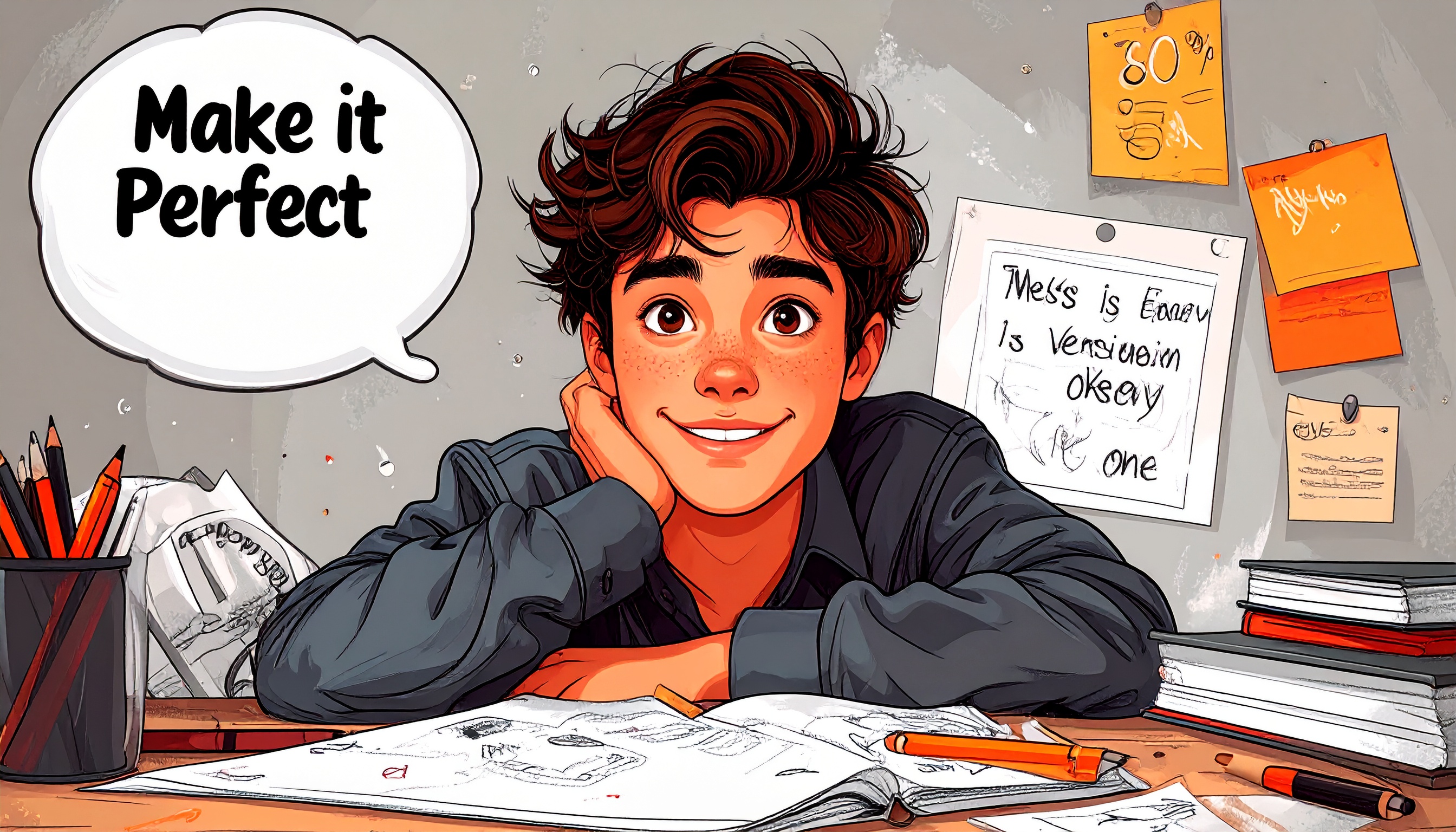
Flat-style cartoon of a person with ADHD surrounded by scattered sketches, messy notes, and unfinished projects. They look frozen at first, overwhelmed by a blinking “Make it perfect” thought bubble. In the next frame (or beside them), they’ve posted something messy but are smiling in relief. Around them are soft affirmations like “80% is enough,” “Messy is okay,” and “This is version one.” Use playful, hopeful colours and a validating tone.

🎯 ADHD & Perfectionism: How to Let Go (A Bit)

You’ve got 47 tabs open, 12 tasks half-started, and one project you haven’t touched in three months—because if it can’t be perfect, what’s the point?

Welcome to ADHD perfectionism: a weird fusion of high standards, fear of failure, and the haunting feeling that everyone else is somehow doing it better.

This isn’t just a mindset. It’s a nervous system pattern. Let’s look at what’s really going on—and how to shift it just enough to breathe.

Continue reading
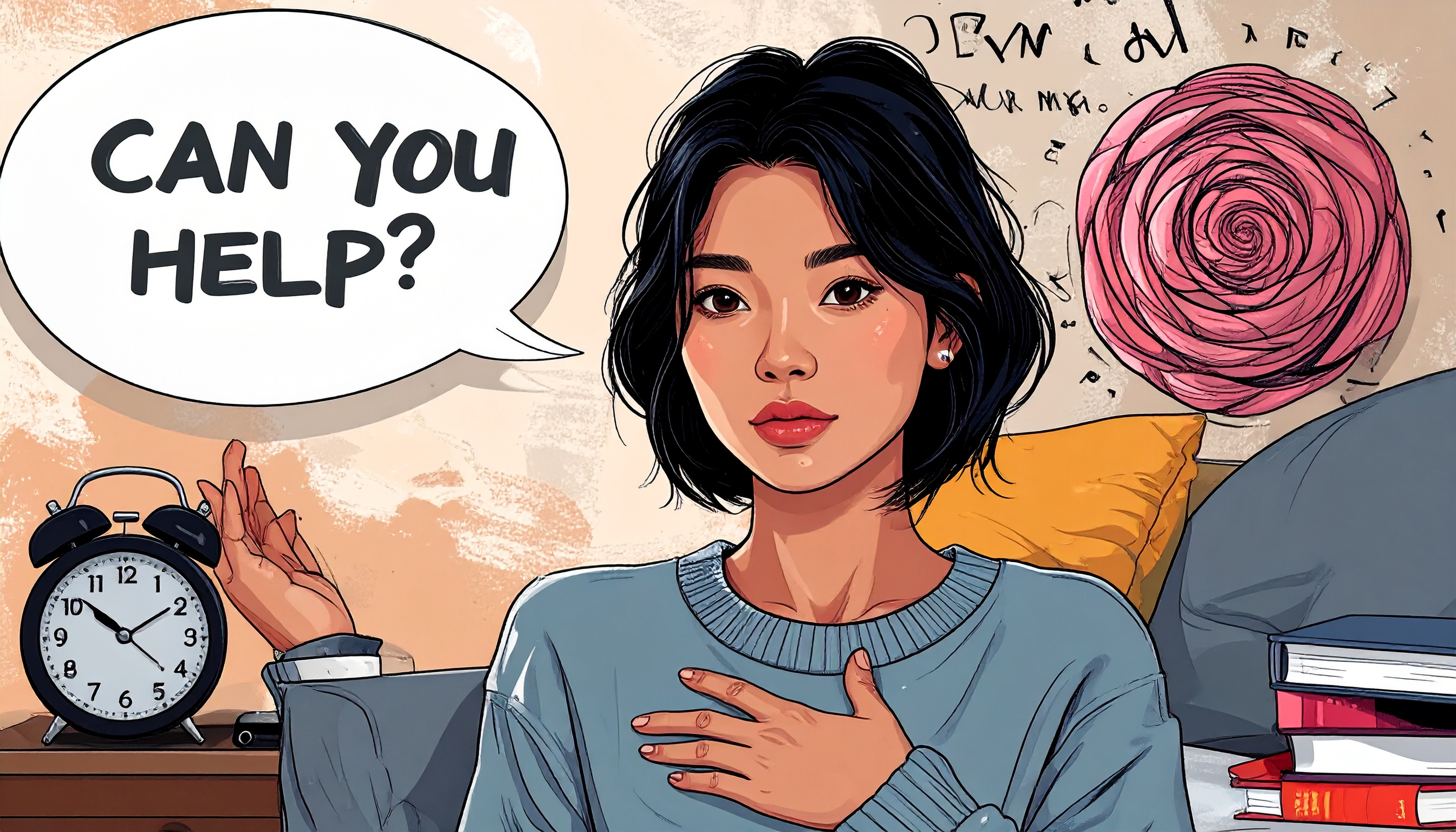
a person with ADHD hesitating in front of a request (speech bubble from someone saying “Can you help?”). Their internal world is visualised behind them: a spiral of guilt, fear, and rejection sensitivity on one side, and calm affirmations like “I’m protecting my energy” on the other. They’re gently putting a hand on their chest with a thoughtful, slightly anxious expression. Soft, warm tones with psychological depth.

❌ How to Say No Without Spiralling

You want to say no. You know you should say no. But your brain panics, your body goes cold, and somehow you’re nodding yes while screaming internally. 🧠🔥

Sound familiar? That’s not just poor boundaries. That’s rejection sensitivity, fawning, and a tangled mess of emotional conditioning.

This post dives deep into the psychology of why saying no feels so hard with ADHD—and how to do it without guilt, panic, or a post-refusal shame spiral.

Continue reading
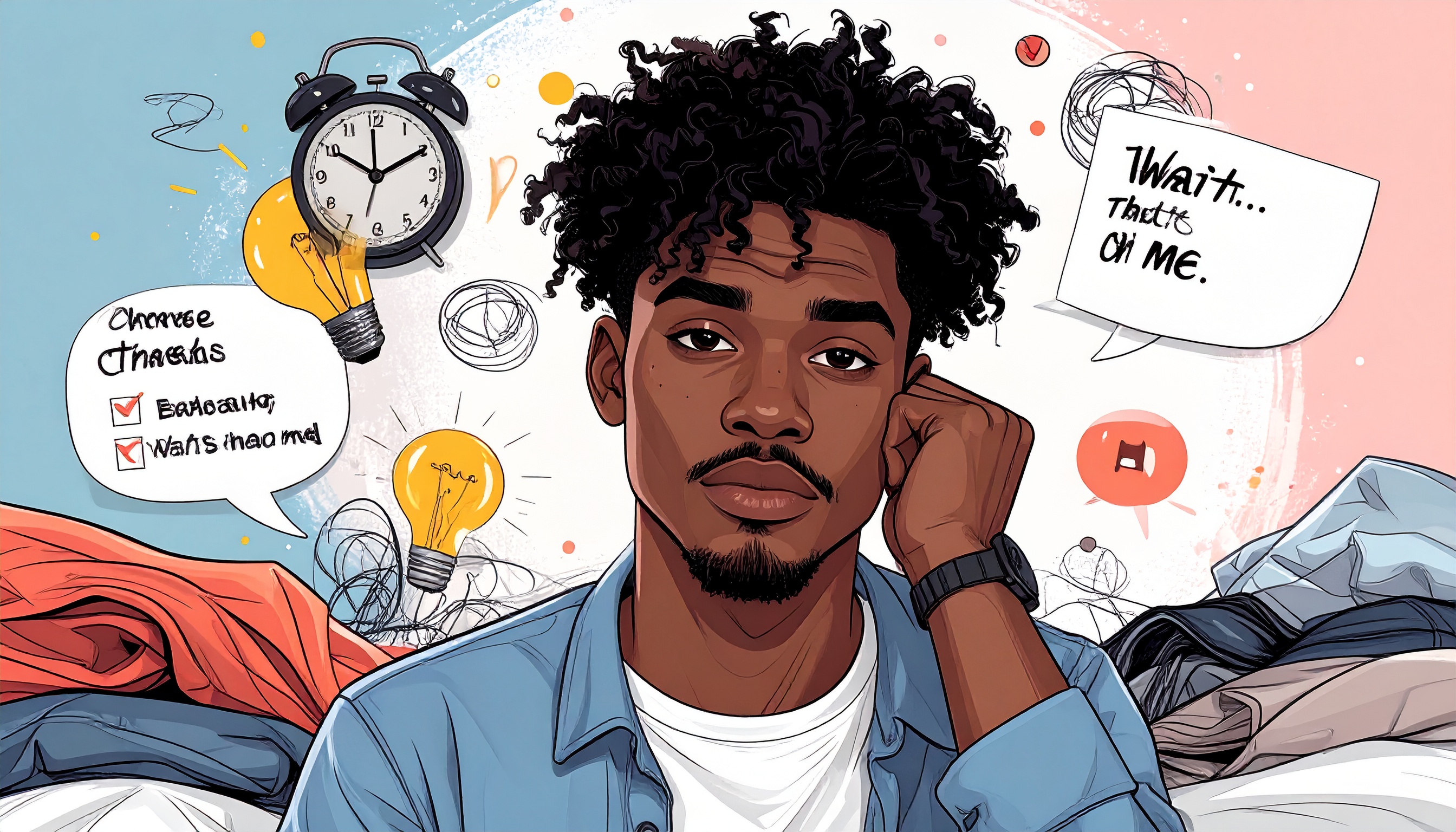
A person with ADHD surrounded by floating checklist items—some are strengths (like creativity, crisis mode, dot-connecting) and some are struggles (time blindness, emotional whiplash, outfit paralysis). Their facial expression is a mix of confusion and “wait… that’s me.” Background is playful, with doodles like clocks, tangled lines, light bulbs, and speech bubbles. Colours should be vibrant but slightly chaotic.

✅ The ADHD Checklist: Signs, Struggles & Strengths

You think ADHD is just about being distracted? Missing deadlines? Fidgeting?

Ohhh no, my friend. Buckle up. This checklist goes deeper—into the weird, hidden, and absolutely under-acknowledged ways ADHD shows up.

If you’ve ever felt like something was off but couldn’t explain it… this list might hit a little too hard. (In a good way.)

Continue reading
a person with ADHD working from home in a playful but structured environment: a “focus chair” with a laptop and headphones, a “break chair” with a snack and blanket, and sticky notes showing a loop of tasks (coffee, email, task, stretch, break). Include ambient elements like a lo-fi playlist on screen, a window showing daylight, and a subtle mess nearby (realistic, not Pinterest-perfect). Warm, inviting, slightly quirky vibe.

🏠 ADHD-Friendly Routines for Working from Home

Working from home sounds like a dream—until you realise your brain has no idea what day it is, what time it is, or where your pants went. 🧠💻

ADHD + WFH can turn your living room into a productivity black hole. But the answer isn’t strict routines or forcing a 9-to-5 mindset.

This post gives you unexpected, brain-friendly ways to build rhythms that reduce chaos, increase focus, and still leave room for snacks, hyperfixations, and mid-day existential detours.

Continue reading
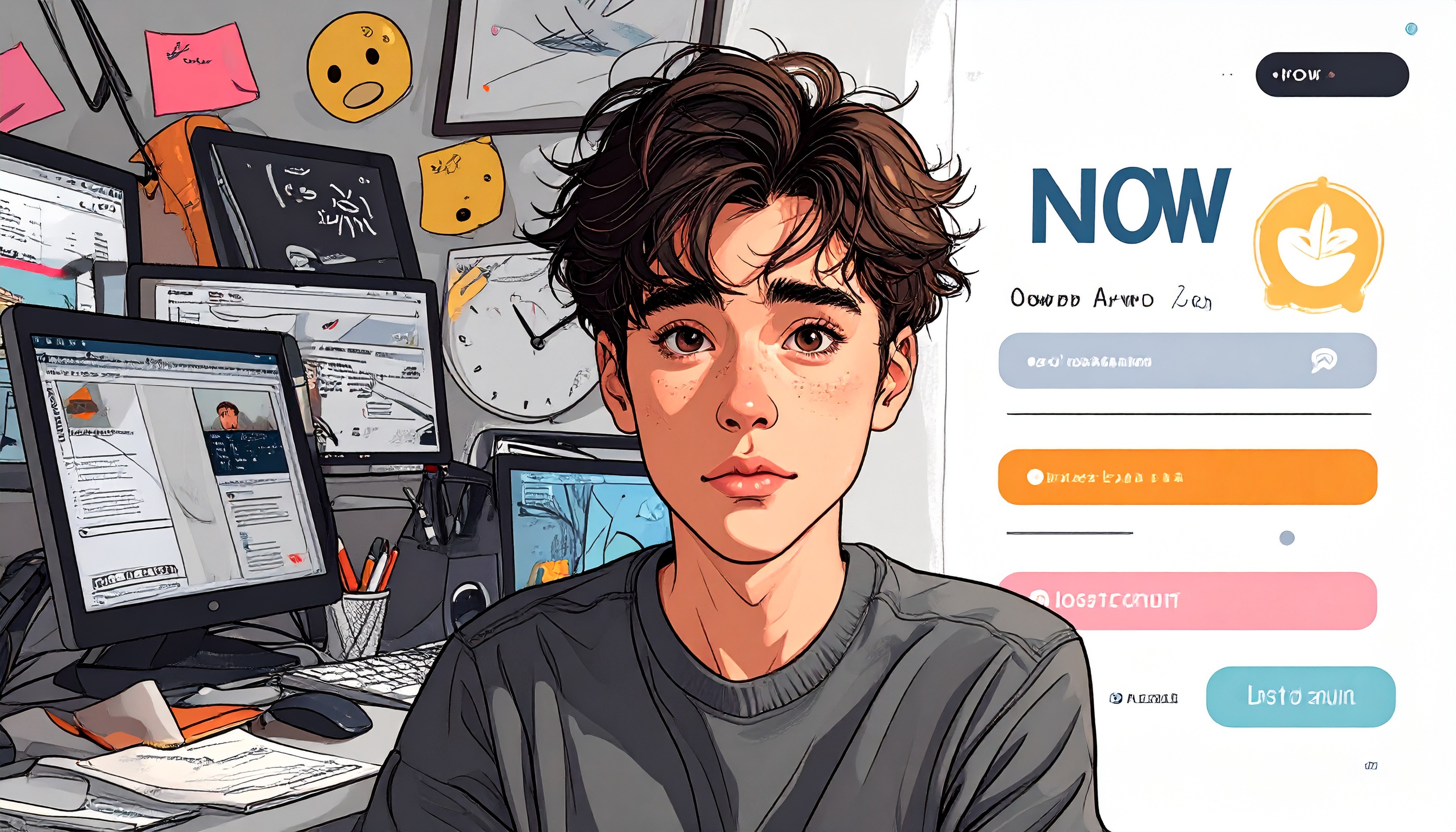
a person with ADHD staring at a chaotic Notion workspace with multiple open dashboards and tabs, looking slightly panicked. In the second panel (or side-by-side), they’re calm in front of a minimalist “NOW” page with only three links and a timer. The background includes visual anchors: emojis, sticky notes, a “Lost & Found” page icon. Colourful but clean; expressive and warm, not cluttered.

🗂️ How to Use Notion Without Getting Lost in It

Notion is powerful. Customisable. Aesthetically pleasing. And also—completely overwhelming if your brain is already juggling 97 tabs, 6 snack urges, and one existential crisis. 🍿🧠💥

This isn’t your average Notion tutorial. This is a survival guide for ADHD brains who want to use Notion to function, not spiral into an endless loop of dashboards, pages, and Pinterest-level perfectionism.

Continue reading
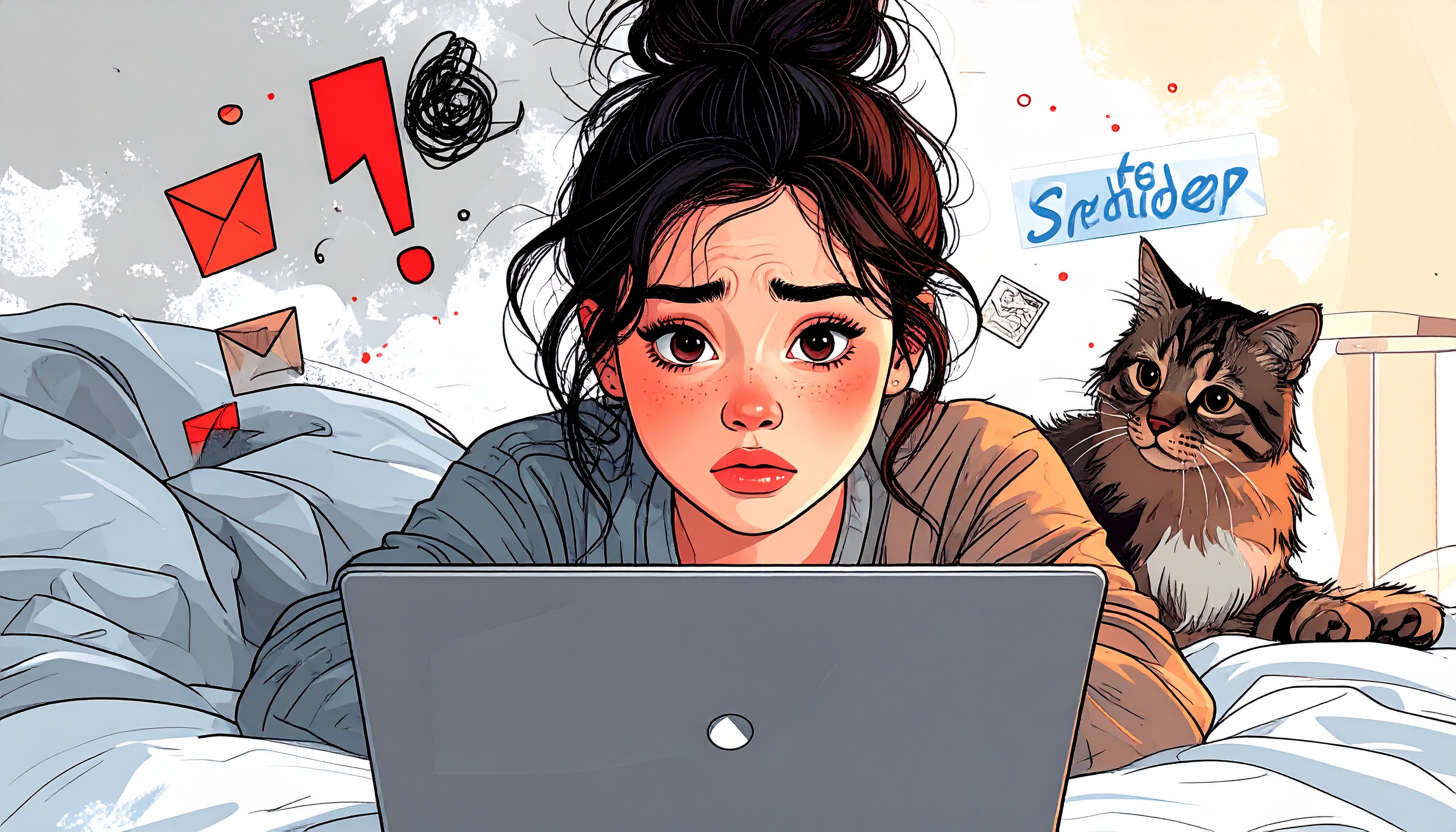
a person with ADHD staring at an email on their laptop, visibly overwhelmed—cheeks flushed, eyebrows raised in panic. Floating around them are exaggerated symbols of spiralling thoughts (e.g., thunderclouds, red exclamation marks, tiny rejection notes). A pet or friend in the background holds a “Safe Decoder” phone, showing emotional support. Use warm colours with emotional expression, not distress.

😭 Why You Cry at Emails: Emotional Regulation for ADHD

One email. Just a few words. And suddenly your whole body tightens, your face burns, and you’re on the verge of tears.

You’re not dramatic. You’re emotionally dysregulated—and you’re not alone.

For ADHD brains, emotional reactions often hit faster, harder, and louder than seems “logical.” Especially when the trigger is vague, abrupt, or even well-meaning.

This post isn’t just about inbox meltdowns. It’s about why small things feel big—and what’s actually happening behind the flood.

Continue reading
a person with ADHD sitting near a wall, applying gentle pressure with their back, holding noise-cancelling headphones in one hand. Around them, visual symbols of overwhelm: bright lights, chaotic sounds, flashing icons, itchy clothing tags. In their backpack: sensory kit items (fidget, hoodie, sunglasses, gum). A calming background element like soft lighting or plants creates contrast. Style is warm, expressive, and slightly cheeky—not clinical.

🚽 How to Deal With Overstimulation (Without Hiding in the Toilet)

Your brain is buzzing, lights are too bright, people are too loud, your shirt tag feels like a fork—and suddenly, you’re fantasising about locking yourself in a bathroom stall just to breathe.

That, my friend, is overstimulation.

It’s not just sensory. It’s emotional. Cognitive. Physical. And when you’ve got ADHD, your nervous system has a lower threshold for “too much.”

This post is for when you’re already overwhelmed—not in a perfect world where you remembered to meditate and meal-prep. These are on-the-spot, under-the-radar tools to get you through real-life chaos.

Continue reading
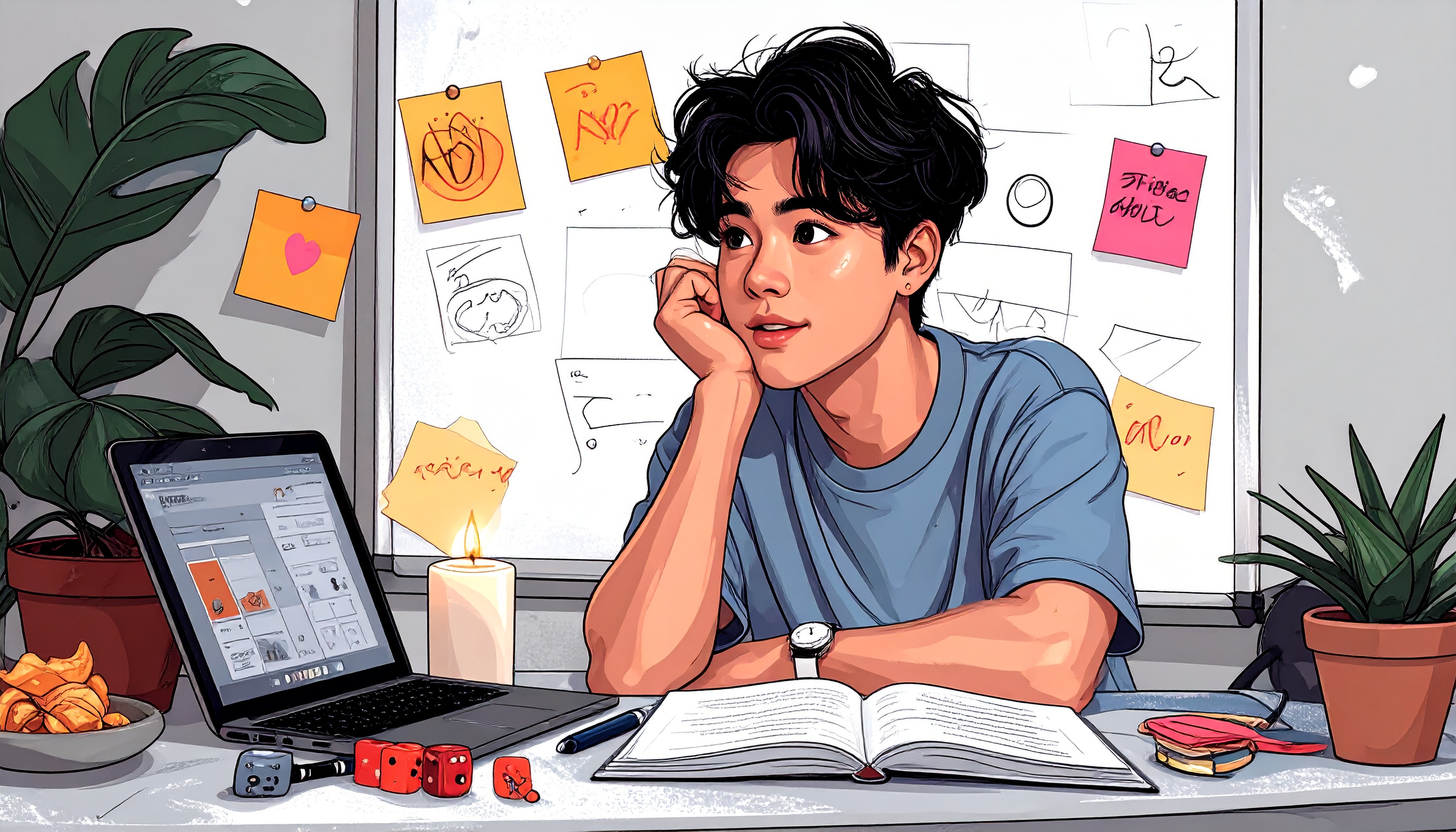
a person with ADHD studying creatively: standing at a whiteboard, talking to a plant or stuffed animal, surrounded by fun, practical tools (dice, snacks, a visible timer, and oversized sticky notes). There's a candle, lo-fi music icon, and a laptop showing spaced recall flashcards. Their environment looks playful, colourful, and clearly not “traditional.” Make it warm and dopamine-friendly.

📚 Study Tips for ADHD Brains That Hate Studying

You open your notes, blink once, and suddenly it’s two hours later and you’ve learned nothing—but you do know every single fact about sea otters.

If studying feels impossible, you’re not broken—you just need a different approach. ADHD brains weren’t built for long lectures, colour-coded binders, or memorising things the traditional way.

Here’s a collection of genuinely helpful, psychology-backed, not-so-basic study tips for the neurospicy mind. Let’s get weird, effective, and actually doable. 🧠✨

Continue reading
two people sitting side-by-side at a table—one is typing on a laptop, the other reading or drawing. They’re not interacting, but there’s a calm, supportive energy between them. Around them: soft lighting, scattered to-do lists, and a clock showing time passing. Optionally, show a pet nearby or a virtual version on screen (Zoom call or YouTube “study with me”). Colours are soft, ADHD-friendly, and the tone is peaceful and focused.

👯‍♀️ The Body Double Trick: Focus, Together

Ever notice how you can’t start your task alone, but suddenly everything gets done when someone else is in the room—doing literally nothing?

That’s not weird. That’s the body double trick. 👯‍♀️🧠

Popular in the ADHD community (and completely underrated outside of it), body doubling is a simple, science-backed technique that helps you stay focused just by having someone present while you work.

Let’s unpack how it works, why it works, and how to use it even if you don’t have someone physically nearby.

Continue reading